
Residential vs. Commercial: Is the 2026 Tax Landscape Forcing Your Hand?
Residential property investors are facing unprecedented tax headwinds. Compare the strategic advantages of commercial property and learn why the 'smart money' is pivoting in 2026.
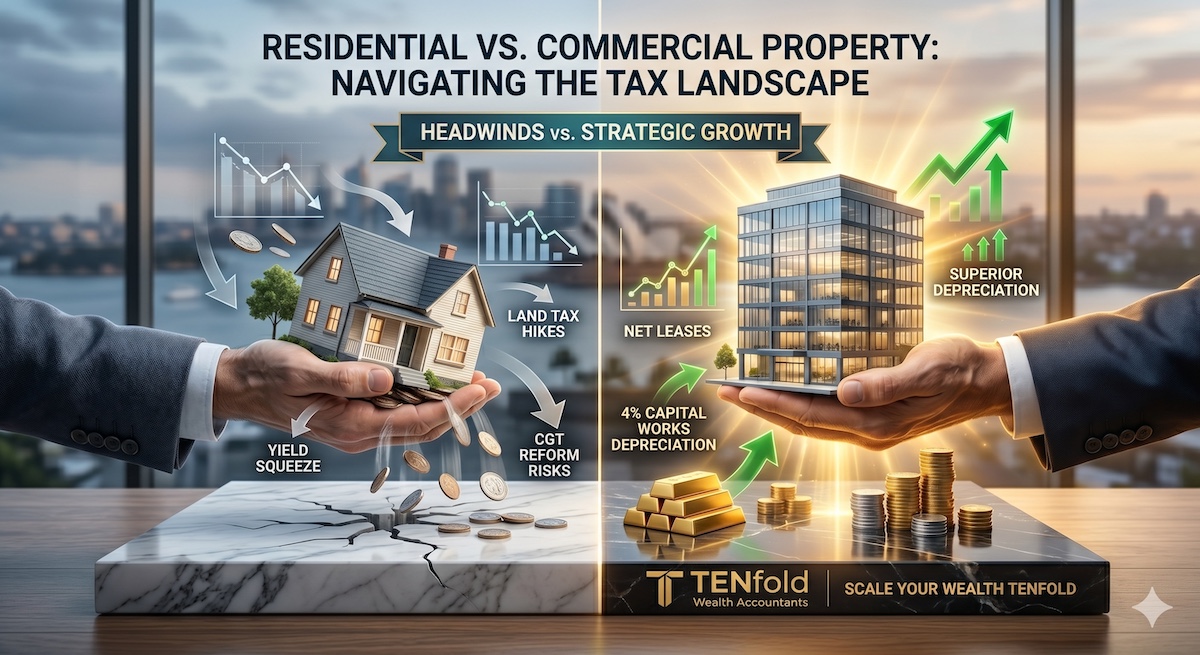
For decades, the "Australian Dream" for investors was a portfolio of suburban residential houses. But in 2026, that dream is meeting a harsh regulatory reality. Between the tightening of Negative Gearing, potential Capital Gains Tax (CGT) discount reforms, and aggressive Land Tax hikes, residential investors are officially on the back foot.
Meanwhile, commercial property is emerging as the "Strategic Shield" for sophisticated investors. As Chartered Accountants, we are seeing a clear trend: the 'smart money' is moving where the tax law still rewards enterprise and investment.
Why Residential Investors are Feeling the Squeeze
The 2026 Federal Budget and recent state-based reforms have created a "perfect storm" for residential landlords:
- The Depreciation Dead-End: Under the ongoing impact of the 2017 reforms, residential investors cannot claim depreciation on second-hand 'Plant and Equipment' (Division 40). This removes thousands in non-cash deductions every year.
- Land Tax Aggression: State governments have lowered thresholds and increased rates, eating directly into rental yields that are already stretched by high interest rates.
- Regulatory Risk: With Senate inquiries targeting the 50% CGT discount, the "tax-alpha" of residential property is under constant threat.
The Commercial Advantage: Why the Grass is Greener
Commercial property isn't just about higher yields; it’s about a superior tax and structural framework. Here is how commercial investors are winning:
1. Superior Depreciation Rules
Unlike residential, commercial property still allows you to depreciate second-hand plant and equipment. Furthermore, many industrial assets qualify for a 4% Capital Works deduction (Division 43), creating a much larger tax shield for your income.
2. Net Leases: Passing on the Costs
In a residential lease, the landlord pays the rates and maintenance. In a commercial 'Net Lease,' the tenant typically pays these outgoings. This protects your cash flow from the very land tax hikes currently crushing residential portfolios.
3. The SMSF Power Move
Commercial property offers a unique "Self-Lease" opportunity for business owners, allowing you to move wealth into a low-tax (15% or 0%) environment—a move strictly prohibited with residential property.
Side-by-Side Comparison
| Feature | Residential (2026) | Commercial (2026) |
|---|---|---|
| Depreciation (Div 40) | New assets only | New & Second-hand allowed |
| Outgoings/Rates | Paid by Landlord | Often paid by Tenant |
| SMSF Use | Prohibited | Allowed (Business Real Property) |
The Verdict: Time for a Portfolio Pivot?
As the government tightens the tax net, the yield and tax-efficiency of commercial assets are becoming impossible to ignore.
At TENfold Wealth Accountants, we specialize in helping investors transition from a "back foot" residential position to a "front foot" commercial strategy.
