
Navigating the GST 5-Year Rule: Why Property Developers Need Accounting Advice Before they Build
Building a new residential property is one of the most exciting—and potentially lucrative—wealth-building strategies in Australia. Whether you are a seasoned developer or a first-time investor working alongside Tenfold Property Advisory to map out your portfolio growth, the goal is always the same: maximize your returns and protect your profit margins.
However, many developers hit an invisible brick wall when it comes time to sell: Goods and Services Tax (GST).
Under standard Australian tax law, selling a freshly built residential property triggers a GST liability, meaning you generally have to hand over up to 1/11th of the sale price to the Australian Taxation Office (ATO).
Thankfully, the ATO provides a legal pathway to bypass this tax bill, known as the "5-year rule." But it is a legal tightrope. If you walk it without professional guidance from day one, a single misstep can cost you hundreds of thousands of dollars.
Here is what you need to know about the GST 5-year rule, and why getting professional accounting advice before you break ground is the most important decision you will make.
What is the GST 5-Year Rule?
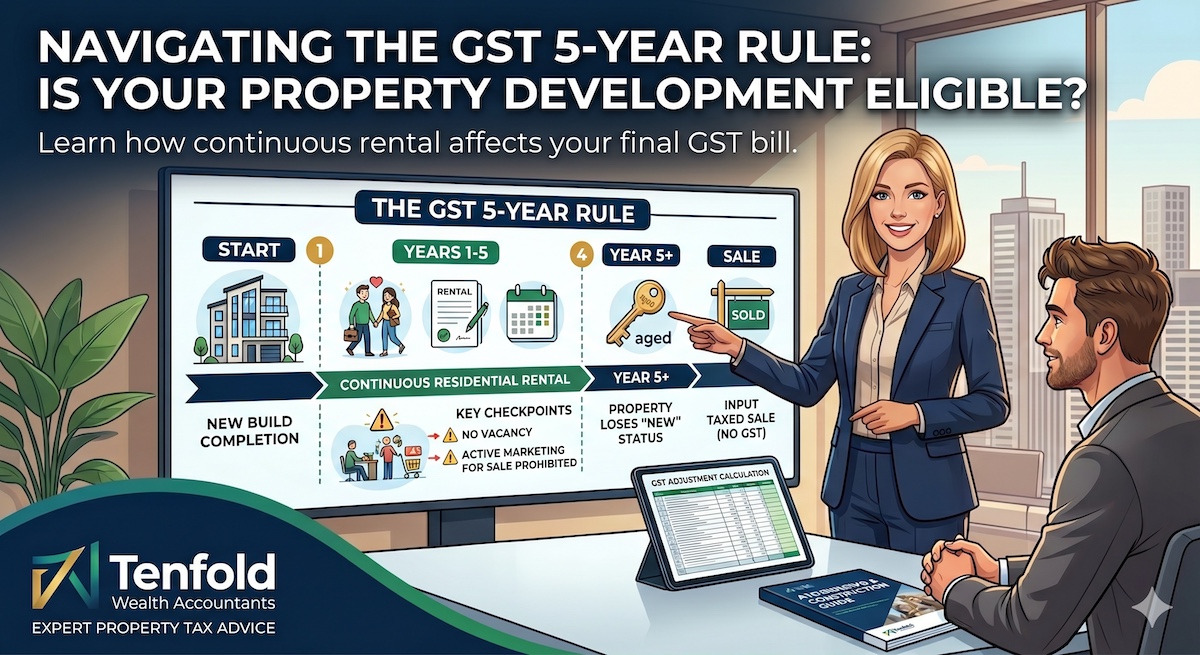
In simple terms, a residential property loses its "new" status under GST law if it is used strictly and continuously for long-term residential rental for at least 5 years after completion.
Once those five years are up, the eventual sale of the property becomes "input-taxed." This means you do not have to charge or remit GST on the final sale price.
While it sounds like a straightforward "buy, rent, and wait" strategy, the ATO monitors these transactions incredibly closely. To successfully navigate it, you must avoid three major traps.
1. The "Unbroken Period" Trap
The five-year rental clock must run entirely uninterrupted.
- What’s allowed: Brief gaps between tenancies (e.g., a week or two to clean the carpets and sign a new tenant) are acceptable, but only if the property is actively and genuinely marketed for rent during that gap.
- What’s not: If you leave the property vacant to wait out the market, or if you or a family member move in for a temporary holiday stay, the five-year clock instantly resets to zero.
2. The Marketing Trap (An Instant Dealbreaker)
Imagine you are four years and ten months into your rental strategy. You decide to get a head start and list the property with a real estate agent so you can settle the day after the five-year anniversary.
This single action will completely destroy your GST exemption. The moment you actively market the property for sale within that five-year window, the ATO deems that it is no longer being used solely for residential rental. The rule is broken, the property remains "new," and you will owe GST on the sale.
3. The GST Clawback (Input Tax Credit Adjustments)
While avoiding GST on the final sale price is fantastic, it isn't entirely free. When you originally built the property, you likely claimed GST input tax credits on your materials, trades, and professional fees.
If you pivot to renting the property long-term, the ATO will require a GST adjustment. Because residential rental income is input-taxed, you aren't legally entitled to full GST credits for the costs of building that rental asset. Consequently, you will have to repay a portion of those originally claimed construction GST credits back to the tax office.
Why You Must Get Professional Advice Before You Start
Too many property developers walk into our offices after the build is complete, asking how to fix a tax issue. By then, their options are heavily limited.
When it comes to property development and GST, retroactive tax planning does not work. Getting proper advice from the team at Tenfold Wealth Accountants before you embark on your project is vital for several reasons:
Choosing the Right Structure Matters From Day One
Should you build in a Discretionary Trust, a Unit Trust, a Company, or your own name? The structure you choose affects not only your GST obligations but also your Capital Gains Tax (CGT) margins and asset protection. Getting expert guidance on Property Tax & Structuring before you sign contracts or purchase land can prevent massive, unnecessary stamp duty and tax bills later down the line.
Cash Flow Forecasting and the "Clawback" Factor
If you plan to use the 5-year rule, you need to budget for the GST clawback. We help you model your exact cash flow so you know precisely how much GST credit you will have to pay back. Furthermore, we can connect you with our aligned Mortgage Broking & Finance experts to ensure your construction and investment lending is structured to support this long-term hold strategy.
Intention vs. Outcome
The ATO looks at your intention at the start of the project. Are you building to sell, or building to hold? If your business records, finance applications, and accounting setup don’t align with your strategy from the very beginning, the ATO can challenge your tax positions. We ensure your documentation matches your strategy perfectly.
Build with Confidence alongside Tenfold Wealth Accountants
The GST 5-year rule is an incredible wealth-generation tool, but the margin for error is razor-thin. One misplaced listing, an unvouched financial record, or an incorrect entity structure can turn a profitable development into an expensive tax nightmare.
Don't leave your hard-earned profits to chance. Before you sign a building contract, let’s sit down and map out a bulletproof strategy. To help you plan your project budget accurately, you can review our clear, upfront costs via our Property Advisor Pricing Guide.
Ready to protect your development profits? Contact the team at Tenfold Wealth Accountants today to book your pre-development tax consultation and build your next project on a rock-solid financial foundation.
