
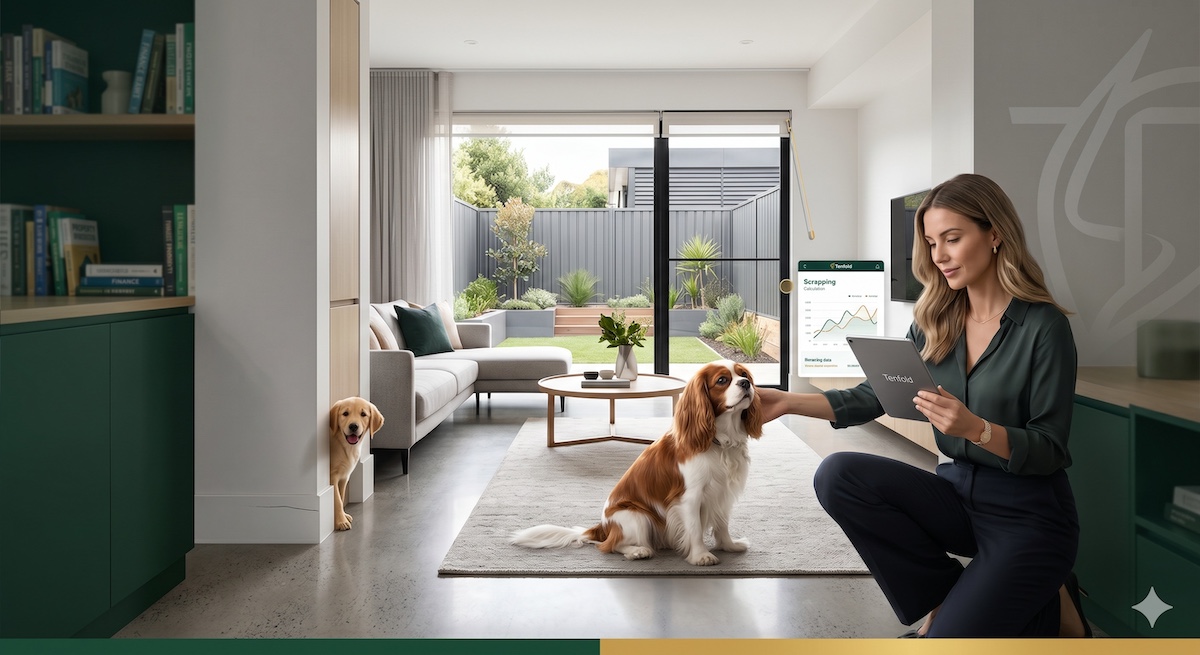
When property investors weigh up the pros and cons of allowing pets in their rentals, the conversation usually revolves around vacancy rates, higher tenant demand, or the fear of a scratched floor.
At Tenfold Wealth Accountants, we look at things differently. For our elite clients, every decision should be evaluated through the lens of tax efficiency and wealth scaling. Surprisingly, whether or not your tenant has a four-legged friend can have a significant impact on your tax depreciation strategy.
The “Tenfold” Perspective: It’s All About Asset Use
Depreciation isn’t just a static line item on your tax return; it’s a reflection of how your assets—the building and its contents—are wearing out as they generate income for you.
Under Australian tax law, your deductions fall into two buckets:
Division 43 (Capital Works): The structural elements like walls and built-in cabinetry.
Division 40 (Plant & Equipment): Removable assets like carpets, blinds, and appliances.
When pets are introduced, the “effective life” of these assets often changes. Increased wear on carpets, scuffing on skirting boards, or extra stress on external fencing means these assets may deteriorate faster than the ATO’s standard projections.
Accelerated Wear = Strategic Opportunity
While “damage” sounds negative, from a strategic accounting standpoint, accelerated wear can lead to earlier deductions. If an asset (like a carpet or a set of blinds) reaches the end of its useful life sooner due to pet-related wear, you may be able to utilize “Scrapping.”
Scrapping allows you to claim the remaining undeducted value of an asset in the year it is disposed of. This can provide a significant immediate boost to your cash flow, which can then be reinvested into your portfolio to scale your wealth tenfold.
Repairs vs. Replacement: Know the Difference
As your proactive tax partners, we want to ensure you don’t fall into common ATO traps.
Repairs: If you are simply fixing a scratch or cleaning a stain to restore an asset to its original state, it is usually a 100% immediate deduction.
Replacement: If the pets have done enough “work” that you need to replace the entire carpet, this is a capital replacement. You’ll need to dispose of the old asset (scrapping) and start a new depreciation schedule for the new one.
Is Your Depreciation Schedule Outdated?
Many investors set and forget their depreciation schedules. However, if your rental has seen a change in tenant profile—such as moving from a “no pets” to a “pets allowed” policy—your schedule may no longer be accurate.
If you’ve performed refurbishments, replaced floor coverings, or updated window furnishings, your current schedule is likely leaving money on the table.
The Tenfold Digital Advantage
Managing your investment property shouldn’t be a paperwork nightmare. At Tenfold Wealth Accountants, we operate a 100% digital workflow. Whether you need us to review your current depreciation claims or help you coordinate a new schedule with a specialist surveyor, we handle everything via Google Meet and digital document portals. We ensure your property strategy is as modern and efficient as your business.
The Bottom Line
Pets in a rental property aren’t just a lifestyle choice for your tenants; they are a factor in your property’s financial performance. By staying on top of accelerated wear and scrapping opportunities, you can maximise your tax refunds and keep your wealth-building momentum high.
Ready to see if your investment strategy is performing at its peak?
Book a Digital Consultation with our Elite Team
You can also send us your latest Depreciation Schedule for Review]
